Civic service design
Modern public websites and service journeys that help residents find answers, complete tasks, and understand what happens next.
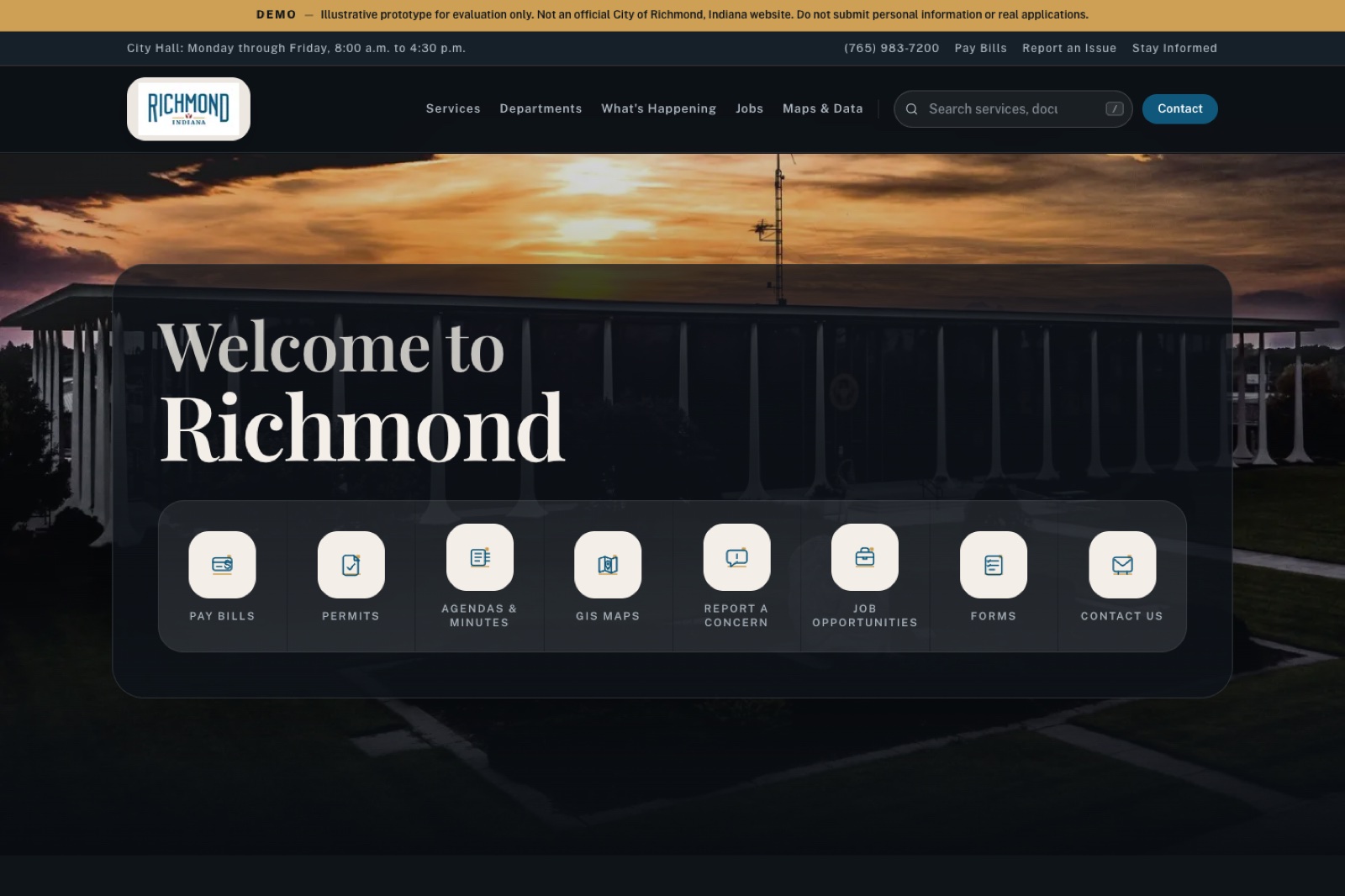
Public websites often have to serve many audiences, departments, and urgent needs at once. The design challenge is to make a large service landscape feel calm, legible, and task-oriented without hiding authoritative information.
We explored a reusable civic experience system: accessible navigation, plain-language service paths, clear ownership, resilient search, maps and documents, and operational tools that keep public content current.
- Resident-centered information architecture
- Accessible service and permit journeys
- Search, maps, documents, and alerts
- CMS governance and staff workflows
See how the system thinks.
A high-confidence starting point organized around the tasks residents come to complete.
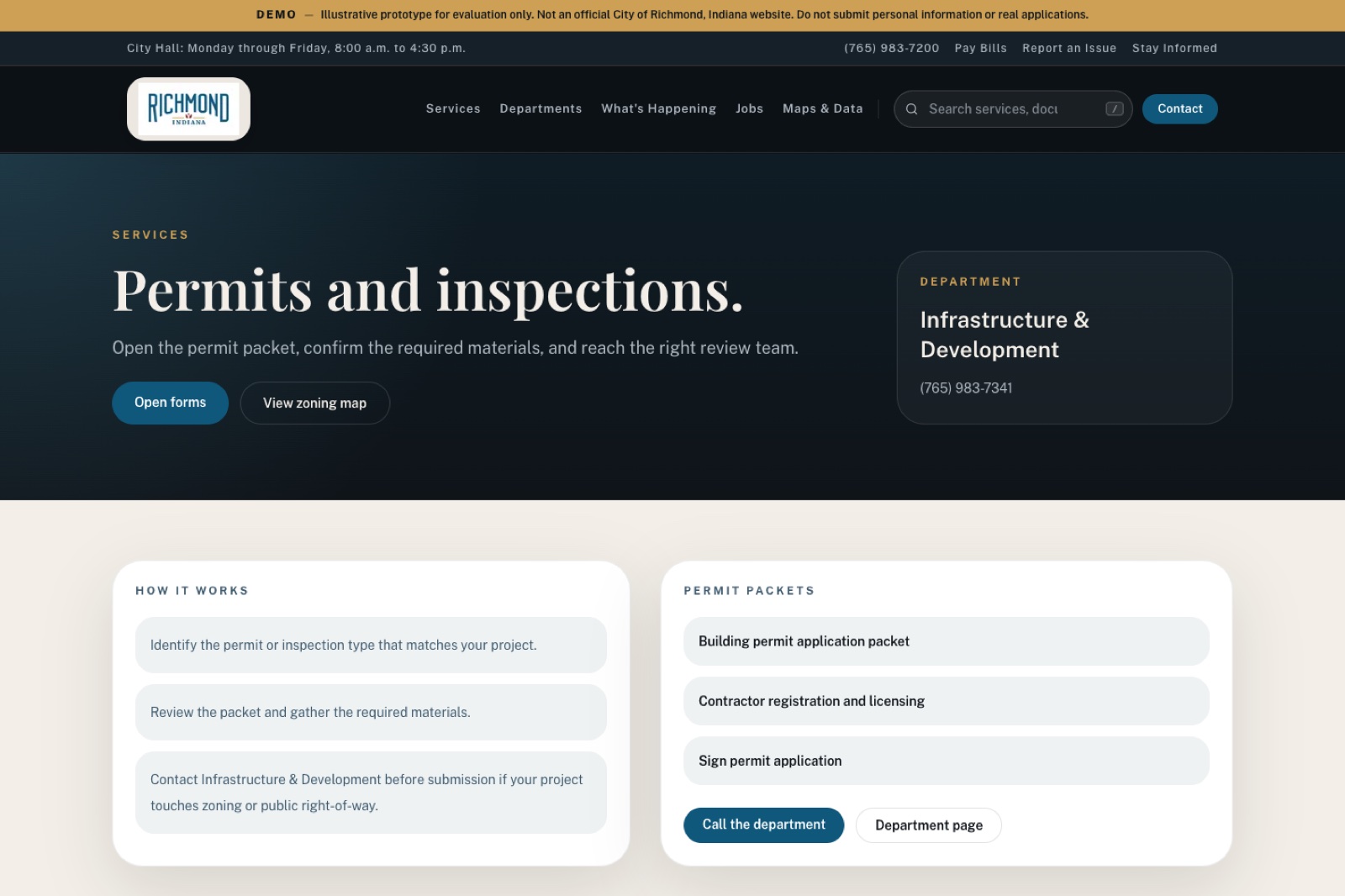
Plain-language permit guidance, responsible department details, and an obvious next action.
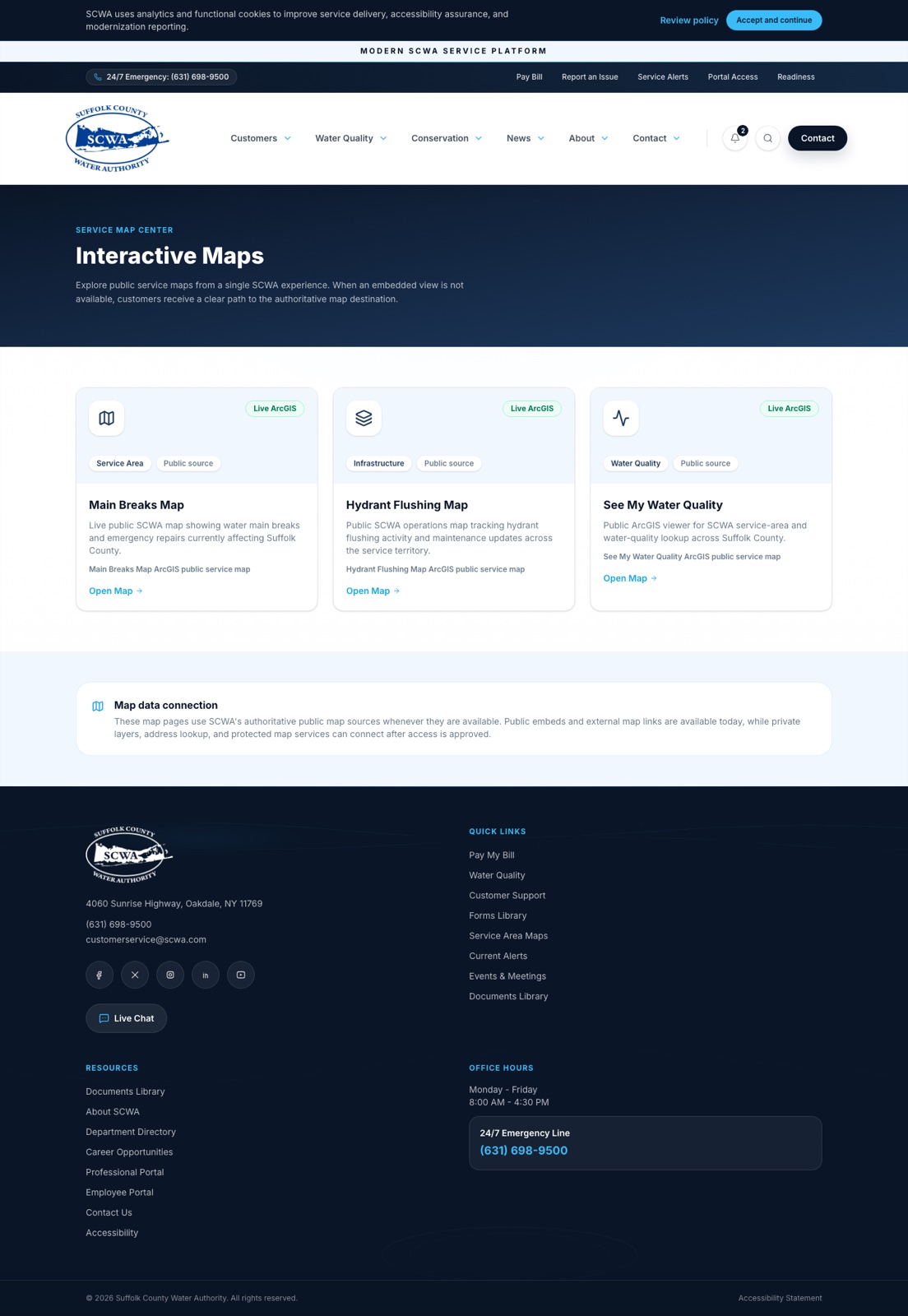
Authoritative maps and public data presented as part of one coherent service experience.
The public problems behind the work.
- City of Richmond website design
- Suffolk County Water Authority modernization
- Cherokee County website redesign
- Jefferson County website redesign
- Red Rocks Community College web experience
- Manatee County website modernization
- Tulsa Housing Authority website redesign
These are independent Runner Concepts prototypes and capability studies informed by public materials. They are not commissioned client work and do not imply an award, affiliation, approval, or endorsement. Screens use synthetic, fictional, or demonstration data.