Public-safety workforce operations
Policy-aware scheduling and staffing controls for complex public-safety operations.
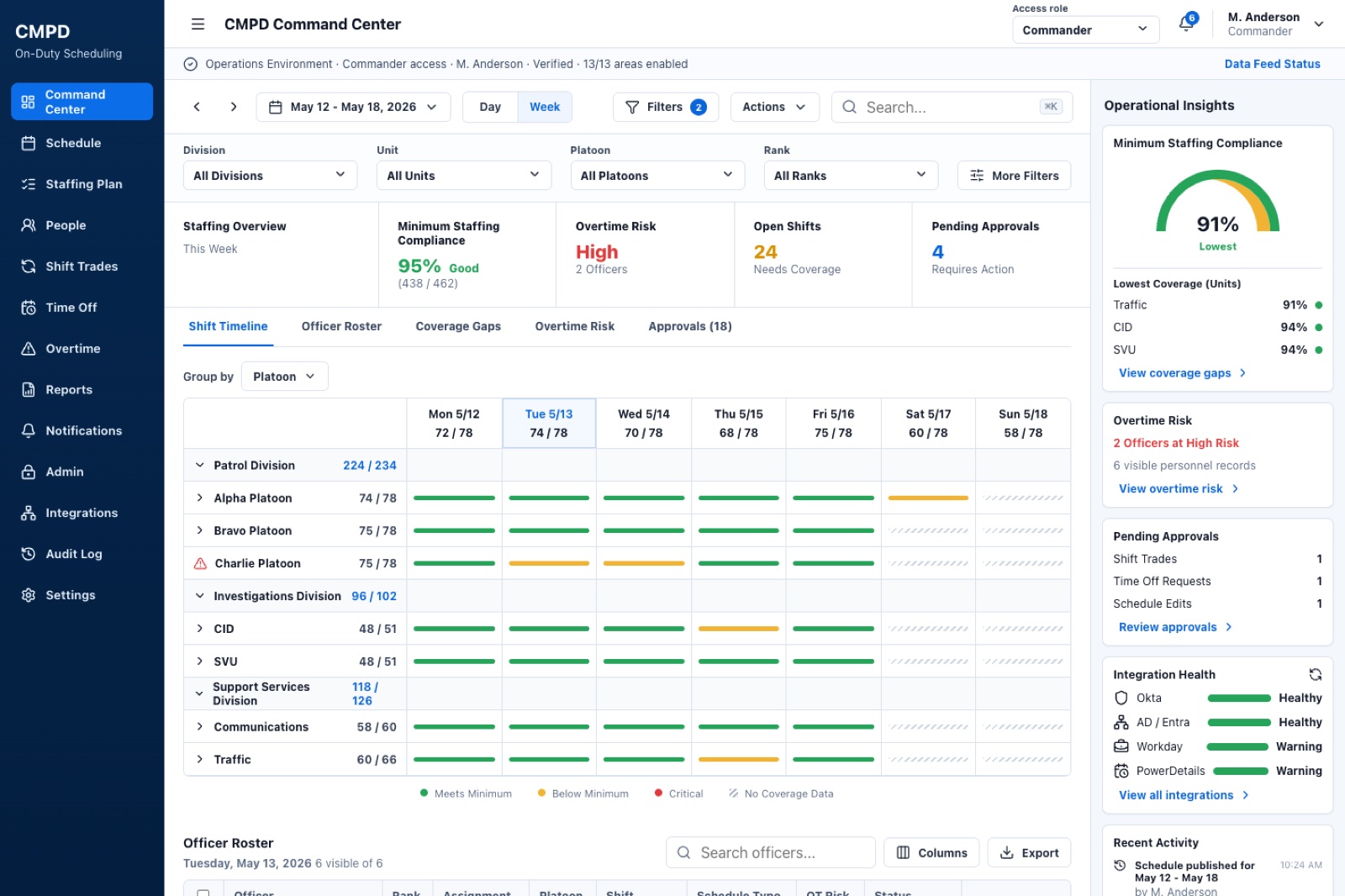
Public-safety scheduling has to reconcile minimum staffing, qualifications, leave, overtime, shift trades, and supervisory review—often across multiple source systems and under time pressure.
The working prototype turns rules into visible decisions. Command staff can see coverage, inspect risk, test assignments, and retain the evidence behind exceptions and approvals.
- Coverage and minimum-staffing controls
- Schedule construction and conflict checks
- Overtime and eligibility policy rules
- Approvals, integrations, and audit history
See how the system thinks.
Coverage, risk, approvals, and integration health are visible in one operating view.
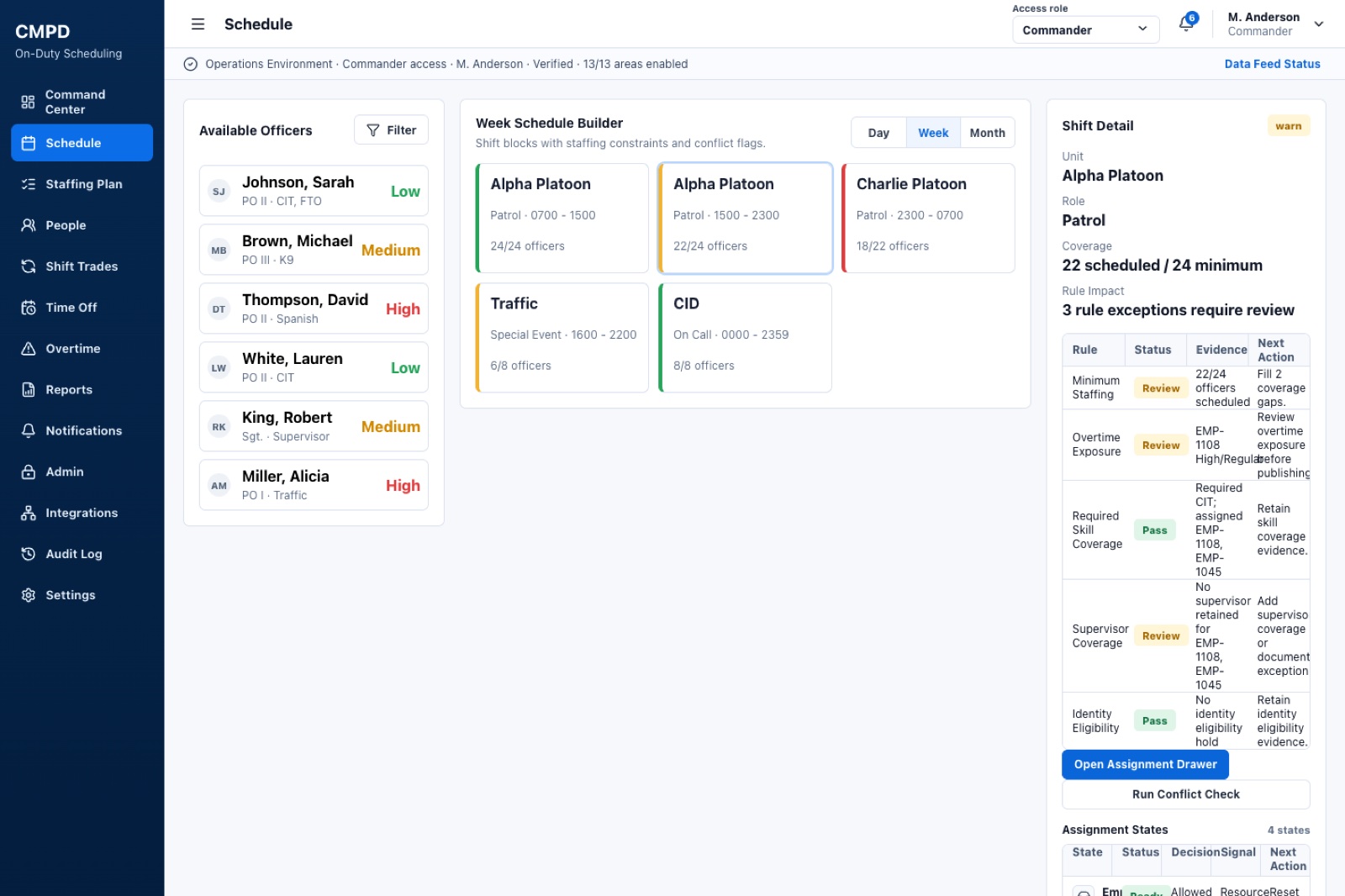
Availability and rule impacts appear beside the assignment decision, not after it.
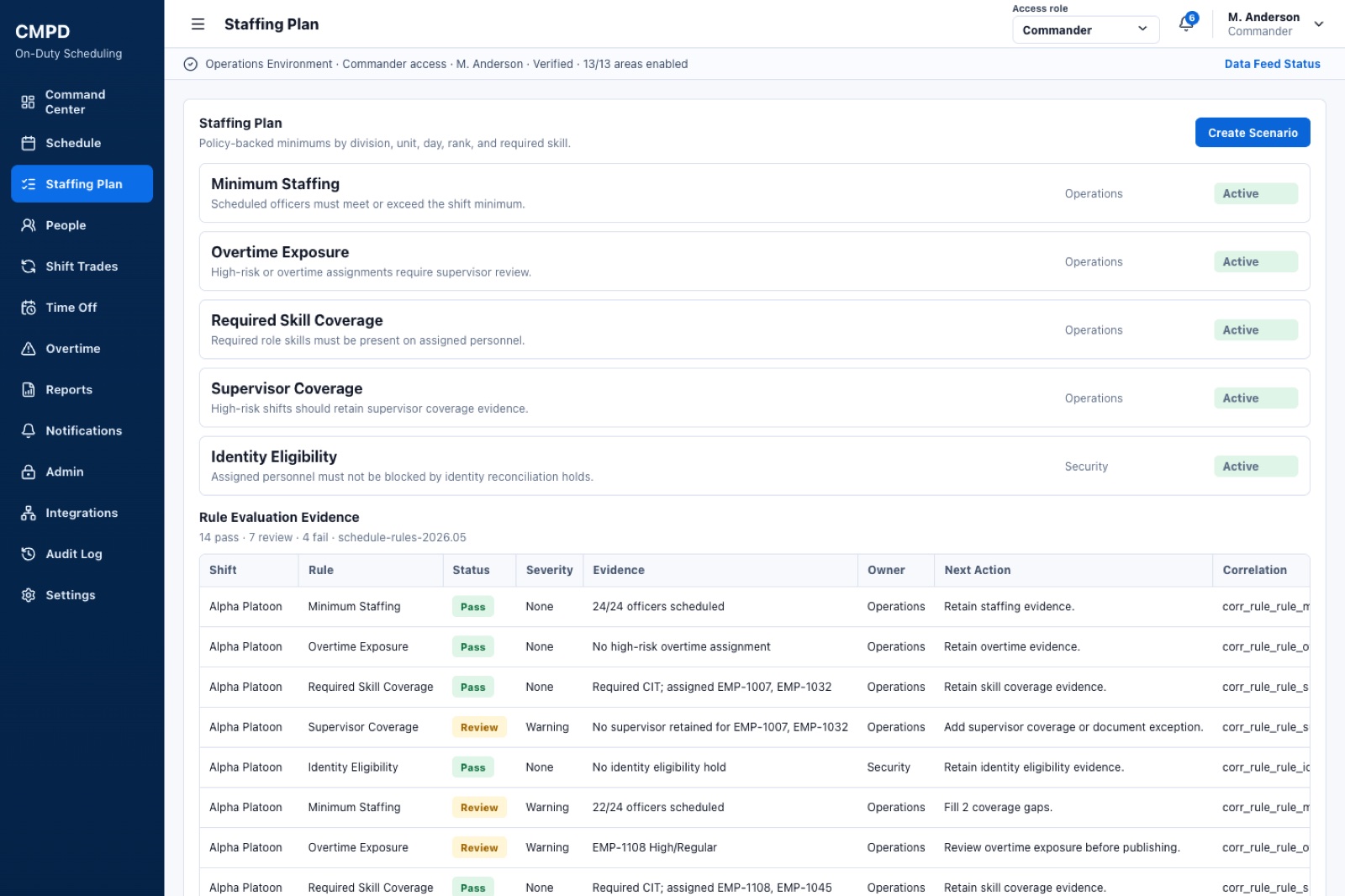
Minimums, required skills, eligibility, and supervisory coverage remain testable and reviewable.
The public problems behind the work.
- Charlotte-Mecklenburg law-enforcement scheduling
- OpenStaff Fire workforce platform
These are independent Runner Concepts prototypes and capability studies informed by public materials. They are not commissioned client work and do not imply an award, affiliation, approval, or endorsement. Screens use synthetic, fictional, or demonstration data.